
Shrove Tuesday dates
Shrove Tuesday, also known as ‘Pancake Day’, is scheduled for the following dates:
- Tuesday, 17th February 2026
- Tuesday, 9th February 2027
- Tuesday, 29th February 2028
It always falls on the Tuesday before Ash Wednesday, 47 days before Easter Sunday. Because it is tied to the date of Easter, it changes every year and can fall anytime between early February and early March.
Shrove or Pancake Tuesday origins
In the United Kingdom, the origins of Shrove Tuesday are rooted in the religious and social practices of medieval times. The term shrove comes from a Roman Catholic practice ‘to shrive’, meaning to confess and receive absolution. In the past, a ‘shriving’ or ‘pancake’ bell was rung on Shrove Tuesday to call people to church to confess their sins and receive absolution by a priest in preparation for the penitential season of Lent, a time of solemnity and self-reflection where Christians resolved to live a more godly life based on the teachings of Jesus Christ1.
Traditionally a day of feasting and indulgence before the start of Lent on Ash Wednesday, Shrove Tuesday always falls 47 days before Easter Sunday. It is intricately connected to the disciplines associated with Lent, during which the consumption of certain foods—particularly those considered rich, such as eggs, butter, milk, and animal fat—was traditionally restricted.
In anticipation of this period of fasting, and to prevent such foods going to waste, households sought to use up these ingredients, giving rise to the custom of preparing pancakes (a thin, flat cake, made of batter and fried in a frying pan). This practice became a defining feature of the day and remains a prominent aspect of its contemporary observance in the United Kingdom; hence the reason Shrove Tuesday is also commonly known as ‘Pancake Day’.
In summary, Shrove Tuesday is rooted in medieval Christian practice, shaped by the practical requirements of Lenten discipline, and enriched by local traditions. Although contemporary celebrations are more cultural than religious, its historical foundations remain evident in the customs still observed today.
Shrove Tuesday celebrations
Shrove Tuesday is associated with many distinct kinds of celebrations, the most well-known are described below.
Pancakes
Shrove Tuesday, or Pancake Day, is marked across the United Kingdom through a series of practices and events. Although its origins lie in the religious observance of Lent, its modern significance is primarily cultural and provides opportunities for communal engagement and social cohesion.
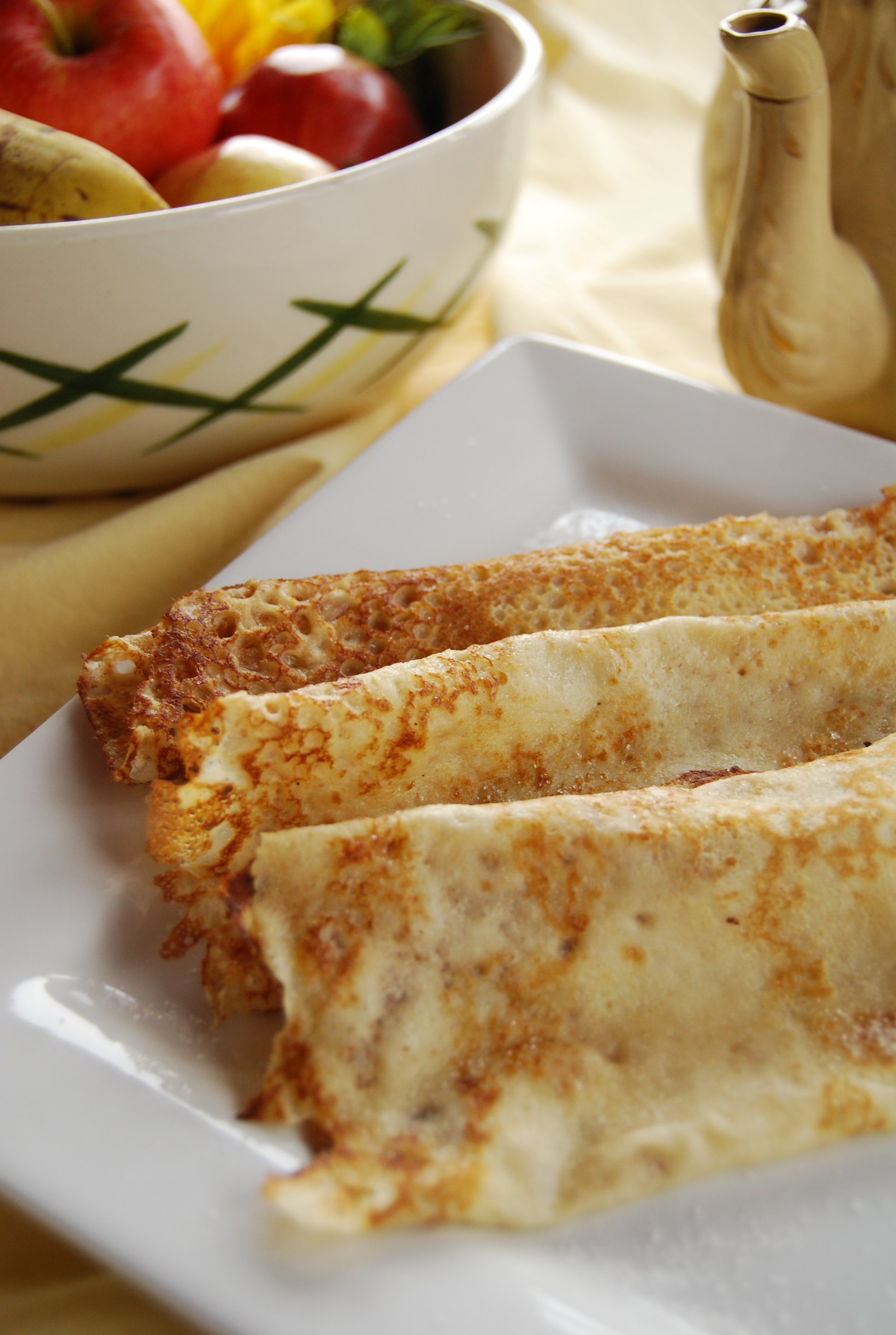
The most widespread and well-known aspect of Shrove Tuesday, which has stood the test of time, is the preparation and consumption of pancakes. These are made of flour, eggs, milk, and salt, ingredients which traditionally needed to be used up before the fasting period of Lent.
Beyond being a mouth-watering treat, the ingredients of a pancake also carry symbolic meaning2:
- Eggs: Creation
- Flour: The staff of life
- Salt: Wholesomeness
- Milk: Purity
This simple dish, with its deep-rooted history, represents the transition from feasting to fasting, indulgence to reflection.
Many households across the UK typically participate in this culinary activity. Unlike thick American fluffy pancakes, British pancakes are generally much thinner, cooked quickly in a frying pan and served with a range of toppings. The most traditional and popular combination is a pancake topped with lemon juice and sugar, though many families now incorporate chocolate spreads, syrups, fruit, or savoury fillings.
The act of tossing the pancake for fun during cooking has become an informal tradition in itself.
Pancake race
While eating pancakes may be the most well-known aspect of Shrove Tuesday, there are also other historical celebrations and traditions that reach well beyond the day’s Christian origins.
In the United Kingdom, one of the most recognisable customs is the pancake race. The most celebrated example is the Olney Pancake Race in Buckinghamshire, a custom that dates back to 14453. According to legend, the tradition began when a woman, busy making pancakes, heard the shriving (pancake) bell and hurried to church still wearing her apron and carrying her frying pan.
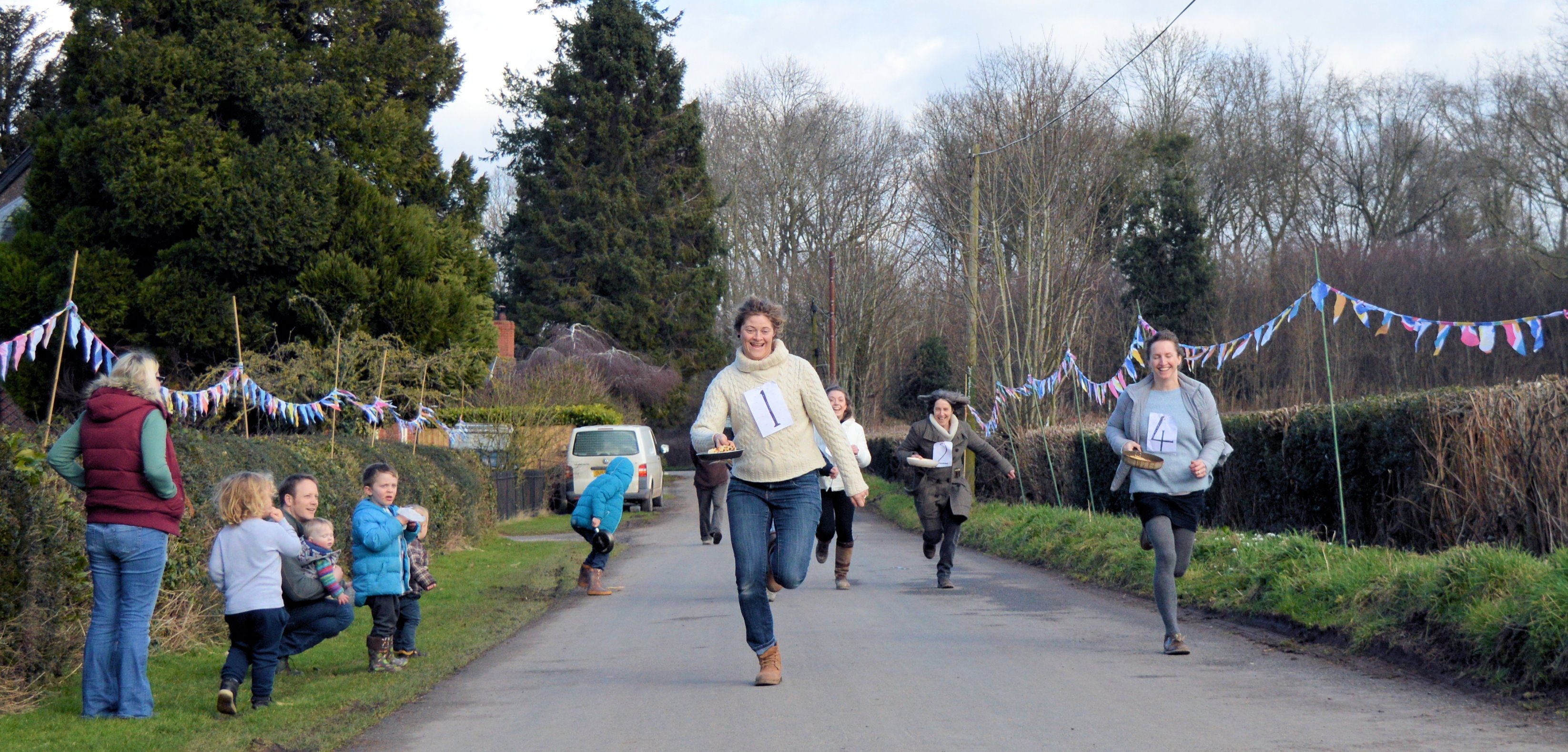
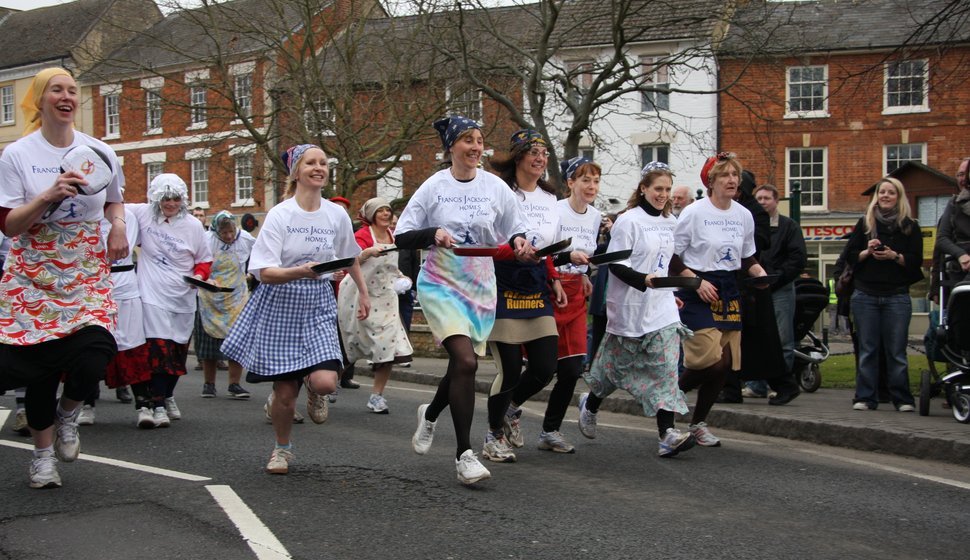
In the modern event, participants, local women who must have lived in Olney for a minimum of three months and be aged over 18, run a 415-yard race while flipping their pancake at least three times without losing it. Tradition dictates that they must be wearing a skirt and headscarf. The winner is the first woman to complete the course, reach the church, present her pancake to the bellringer, and receive a kiss from him.
While this traditional event did die out during the second world war, it was resurrected in 1948 by Reverend Canon Ronald Collins. The event even gained international admirers and in 1950 the town of Liberal in Kansas, USA, began copying the tradition. To this day, the twinned towns compete annually for the fastest time.
Pancake Grease
Another distinctive variation of Shrove Tuesday celebrations takes place at the elite Westminster School in London, where pupils take part in the ‘Pancake Grease.’ This event dates back to the mid-1700s (possibly 1753) and involves the Head Cook tossing a large pancake over a 15ft iron bar.
Chosen scholars from each form in the school rush to catch the largest piece. The winner is rewarded with a financial prize from the Dean (originally a guinea or a sovereign) and the whole school is granted a day’s holiday. This is a custom that has been upheld for centuries and in 1919 it was even attended by King George V and Queen Mary, with the two future monarchs in tow: their sons, the future Edward VIII and George VI4.
Skipping Day
In the north of England, the town of Scarborough in Yorkshire hosts another fascinating Shrove Tuesday custom. Here, crowds assemble along the promenade for a mass communal skipping event, using long ropes stretched across the street.
Although the precise origin of this practice is uncertain, it is sometimes linked to medieval agricultural beliefs that associated skipping movements with the sowing of crops which may have been played on barrows (burial mounds) during the Middle Ages. Others believe that the tradition honours the town’s rope-making and fishing industries, where sturdy ropes were essential. The first official recording of ‘Skipping Day’ was in 19035.
‘Shrovetide’ mob football
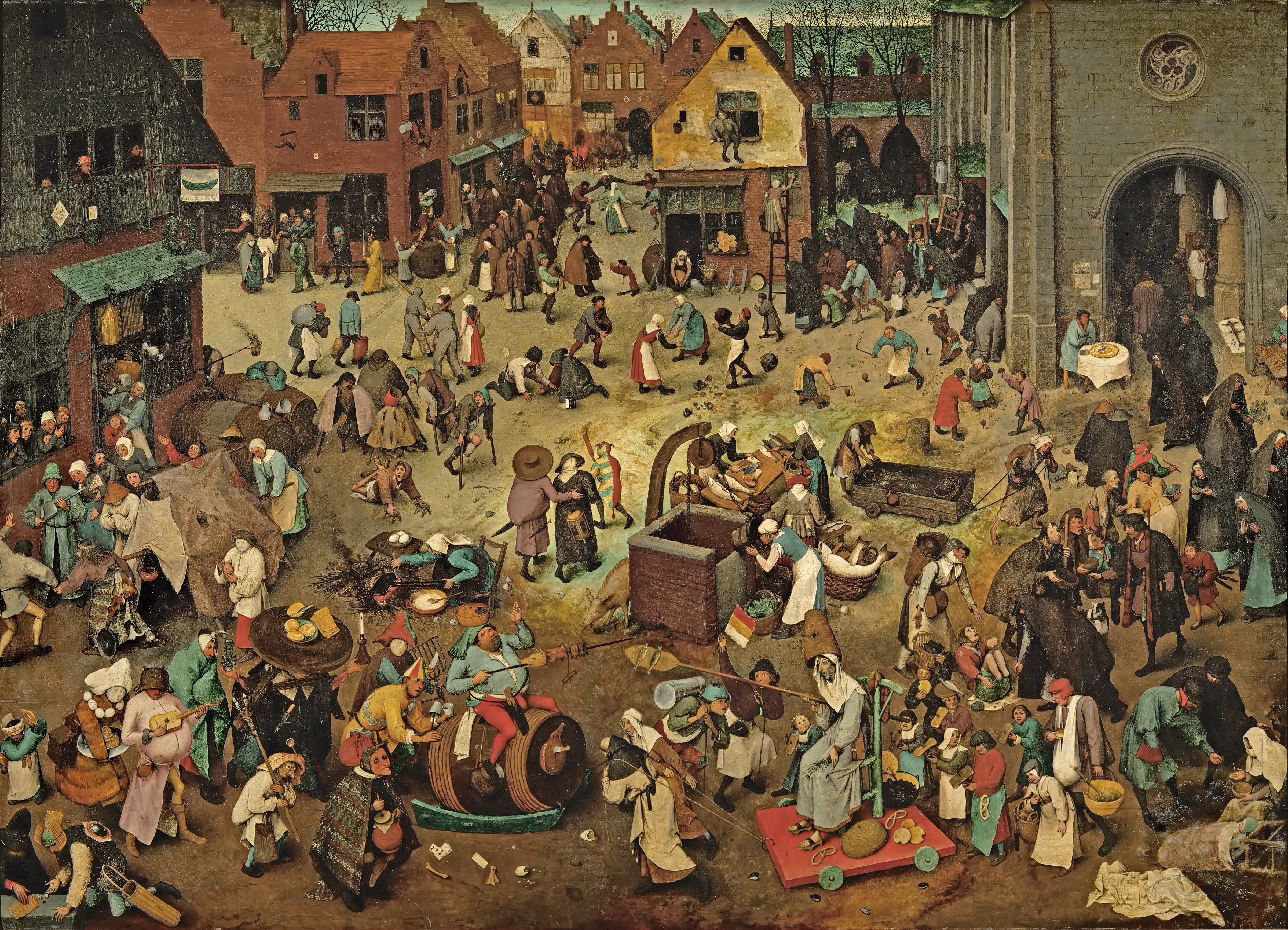
Many towns throughout England also used to host traditional ‘mob football’ games on Shrove Tuesday. These date back to the 12th century. They were chaotic and somewhat rough ball games involving two rival teams of local people trying to manoeuvre a huge ball from one end of town to the other.
There were minimal rules and no limit as to the number of players. While many of these matches were banned in the 19th century due their unruly nature and the passing of the 1835 Highways Act (which banned the playing of football on public highways), towns such as Ashbourne in Derbyshire, Atherstone in Warwickshire, and Sedgefield in County Durham have managed to keep the tradition alive6.


Throwing at cocks
‘Throwing at cocks’ is a largely forgotten shrovetide sport. It involved either fastening a cockerel to a length of string and throwing heavy objects at it or burying the bird so that only its head protruded above the ground, with blindfolded participants attempting to strike it using a blunt instrument. The individual who succeeded in killing the cockerel was entitled to keep it, presumably for consumption.
This unsettling custom appears to have had a practical rationale: as Ronald Hutton observes, "it made sense to kill off poultry if eggs were forbidden in Lent, and to a brutal society it was equally logical to have some fun in the process7". The last recorded instance of this taking place was in Quainton, Buckinghamshire, in 1844.
References
Read Christianity.org’s introduction to Lent and its meaning
Official Olney Pancake Race website: history and event details
Scarborough Maritime Heritage article on Shrove Tuesday skipping
Read Also
-
Why do we eat pancakes on Shrove Tuesday? on English Heritage.
-
Shrove Tuesday Entry on the Encyclopaedia Britannica
-
Westminster School Pancake Greaze Entry in Oxford Reference
-
Shrovetide and the Original Derby Game on Historic-UK