
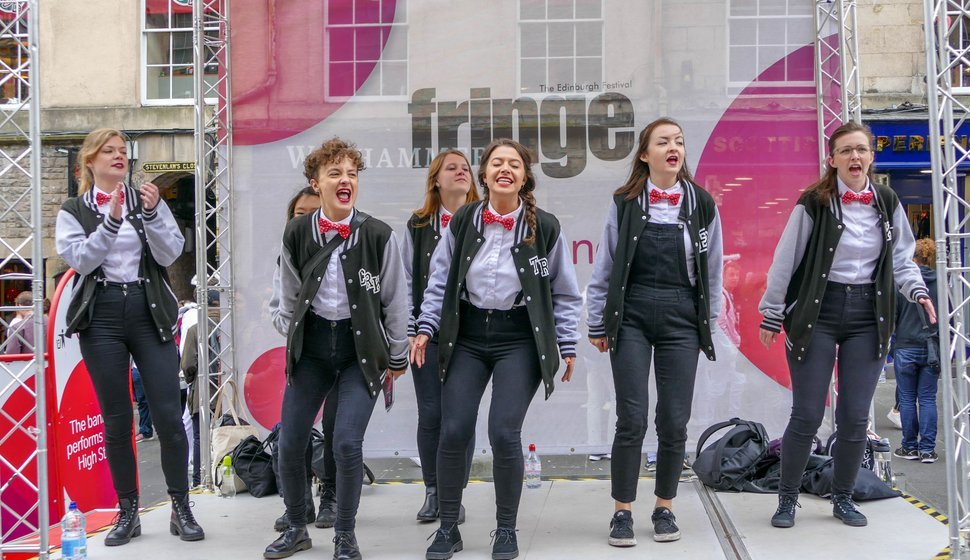
Edinburgh Festival Fringe dates
The Edinburgh Festival Fringe, often called ‘the Fringe’, is scheduled for the following dates:
- from Friday, 7th to Monday, 31st August 2026
- from Friday, 6th to Monday, 30th August 2027 (estimated)
- from Friday, 4th to Monday, 28th August 2028 (estimated)
The festival takes place in Edinburgh every year for just over three weeks in August, usually starting on the first Friday of the month and running for 25 days to the final Monday, so exact dates change annually but always fall in August.
Edinburgh Fringe Origins
As the largest arts festival in the world, the Edinburgh Festival Fringe welcomes artists and performers from all over the world. Every August, for three weeks, Scotland’s capital transforms into a vast, living stage as thousands of performers from across the globe come together to present an extraordinary range of work, spanning cabaret, children’s shows, comedy, dance, physical theatre, circus, music, musicals, opera, and theatre.
The first murmurings of the festival began on 24th November 1945, when plans were announced in three newspaper articles in The Scotsman and the Evening Dispatch, which later became the Evening News1. Most people were in favour of hosting a festival and supported the idea of a spectacular celebration of the ‘flowering of the human spirit', the founding vision expressed by the Lord Provost2 in the aftermath of a harrowing world war.
As a result, a festival committee was formed in late 1945. Influential figures in this committee included Rudolf Bing3 (at the time General Manager of the Glyndebourne Opera), Henry Harvey Wood4 (from the British Council) and other leaders from Edinburgh. In September 1946, the City Council agreed to a three-week festival (24th August – 13th September 1947), voting £20,000 to a guarantee fund to go alongside equivalent sums from The Arts Council and private citizens5.
While the first International Festival, in August 1947, invited the some of the world’s best performers to the Scottish capital, including the Royal Liverpool Philharmonic, the Hallé Orchestra and Sadlers Wells Ballet5, and saw performances of the Taming of The Shrew and Moliere’s L’Ecole des Femmes, two other important events took place. Firstly, a weeklong film festival was organised by the Edinburgh Film Guild, which eventually became known as the Edinburgh International Film Festival6.
Secondly, eight theatre groups arrived uninvited to the festival and, although officially excluded due to drama being considered too ‘low-brow’ and not cultured enough for an international audience7, they set up shop in makeshift venues away from the official festival (including basements, halls, and pubs around the city) and did their own thing. The ‘Festival Fringe’ was officially born.
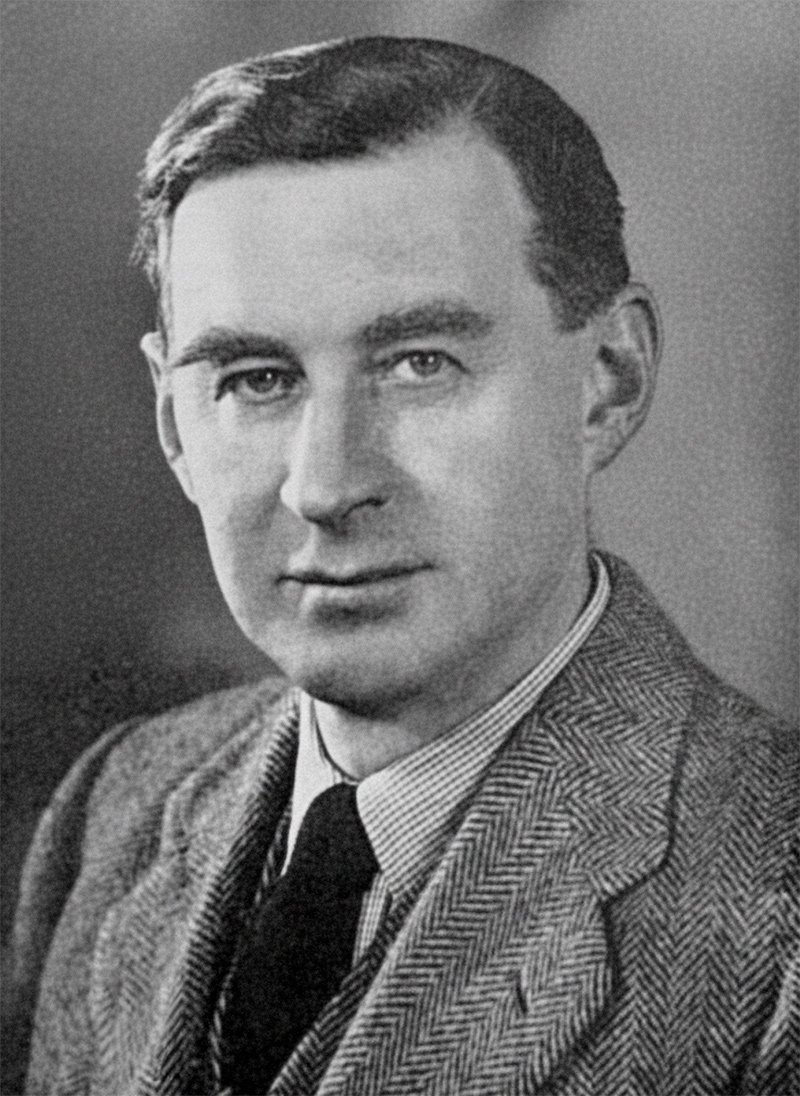
The name 'Fringe' actually originated the following year, when Scottish playwright and journalist Robert Kemp wrote, during the second Edinburgh International Festival, ‘Round the fringe of official Festival drama, there seems to be more private enterprise than before ... I am afraid some of us are not going to be at home during the evenings!’8
The ‘eight uninvited’9 are cited as being the following:
- Glasgow Unity Theatre
- The Christine Orr Players
- The Edinburgh College of Art Theatre Group
- Edinburgh People’s Theatre
- Edinburgh District Community Drama Association
- The Scottish Community Drama Association
- London’s Pilgrim Players
- The Lanchester Marionette Theatre
The next few years witnessed more performers following their example and in 1958 the Festival Fringe Society10 was formed. This entity provides support, advice, and encouragement to all participants, assists audiences to navigate what’s on offer, and promotes the Festival Fringe all over the world. Their founding principle is to ‘be an open access festival that accommodates anyone with a desire to perform and a venue willing to host them.’
Fringe celebrations
Since 1958, the Festival Fringe has shifted from being an unofficial sideshow to a recognised performing arts festival in its own right and is cited as being the most impressive in the world11.
Its influence has led to the emergence of around 300 independent fringe festivals globally, focused mainly in English-speaking countries but scattered across all continents, and brought together under the umbrella of the World Fringe Network12.
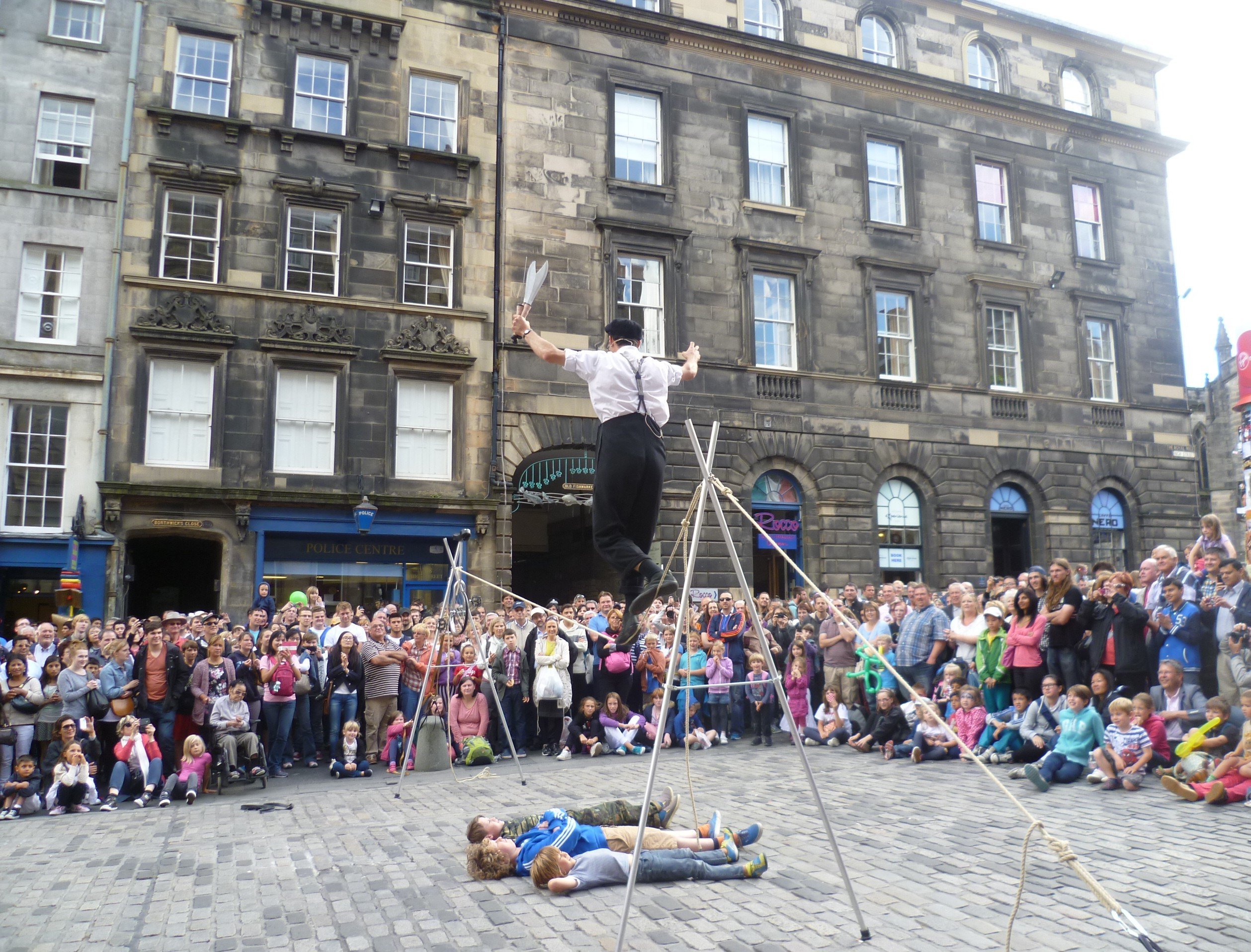
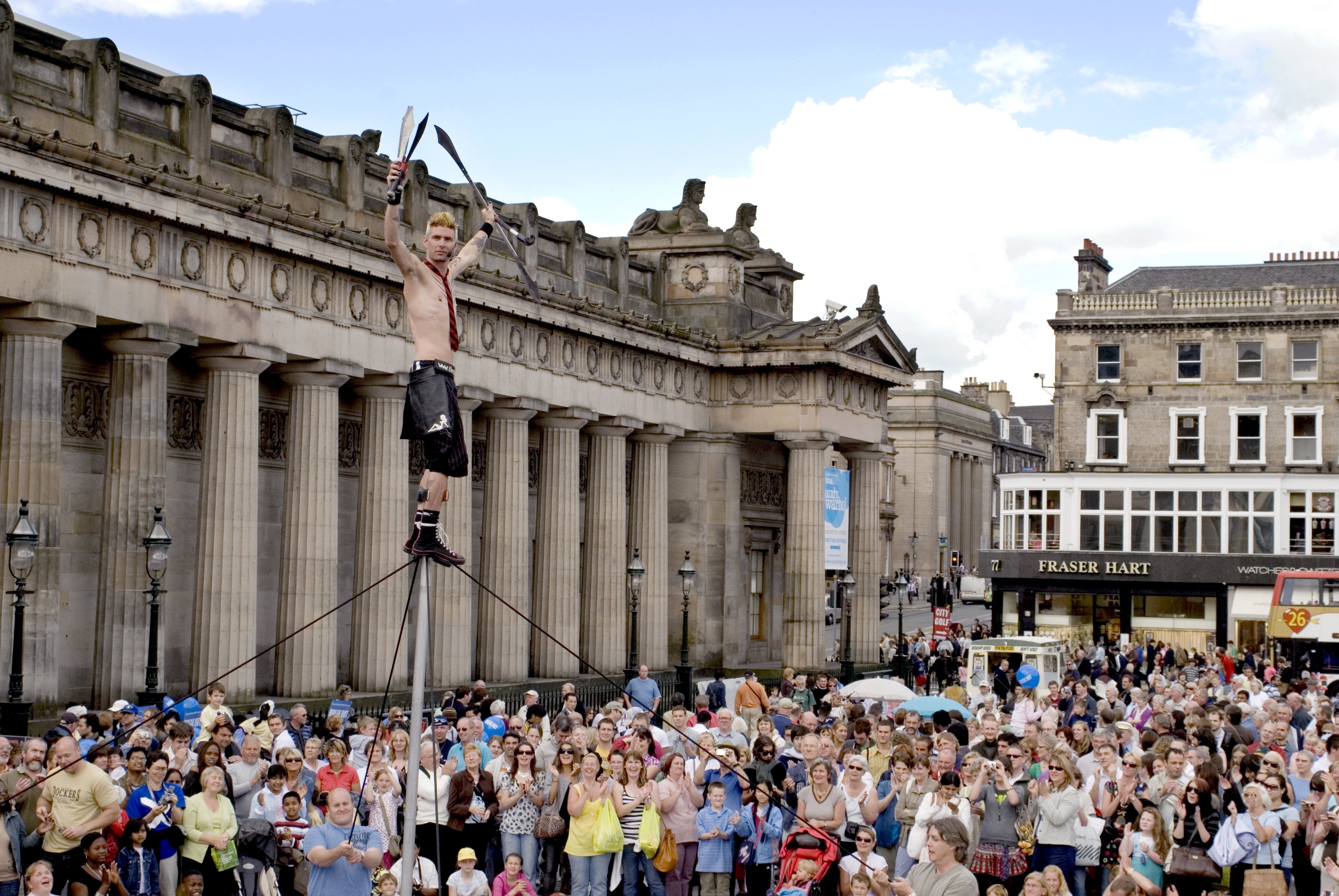
In stark contrast to the International Festival, at which artists perform by invitation only, the Fringe is open to all, from big names in the world of entertainment to unknown artists looking to build their careers. Anyone with a venue can put on a show, and its all-encompassing nature means you can enjoy everything from children’s shows, comedy, dance, opera, musicals, and plays, to daring acrobatics displays, living statues, workshops, and buskers.
The main performance areas are right in the heart of Edinburgh – the High Street / Royal Mile (from Cockburn Street to George IV Bridge), Hunter Square and the Mound Precinct, off Princes Street. The most well-known spaces (known as the ‘big four’13) are:
- Assembly - The oldest of the Big Four, operating 17 theatre spaces and eight bars. Assembly’s Festival Fringe operation is more than three times the size of the rival Edinburgh International Festival, with an audience equivalent to the annual BBC Proms.
- Gilded Balloon - Known as comedy central, Gilded Balloon is the home of unofficial Australian artists at the Fringe. Here original solo performances and stand-up shows dominate the lineup.
- Pleasance - Home to large-scale productions including the Fringe favourite improv musical ‘Showstoppers’ (where performers improvise a new musical every night). It also hosts many, international comedy, and cabaret acts.
- Underbelly - Home to the offbeat and the unusual, the Underbelly is one of the most distinct Festival Fringe venues due to its iconic flipped cow imagery. In past years, it has hosted well-known comedians, such as Joan Rivers and Russell Howard, and has also been the venue for comic musicals such as ‘Jerry Springer – The Opera.’
From a small handful of uninvited theatre companies in the late 1940s, the Edinburgh Festival Fringe has grown into a global, open-access arts megafestival, shaping careers in comedy, theatre, and performance worldwide. Its evolution reflects broader cultural shifts: post-war experimentation, the rise of alternative comedy, globalisation, digital exposure, and most recently, the challenges of sustainability and affordability.
In recent years, the most notable challenge was the 2020 global Covid-19 pandemic when the festival was cancelled for the first time in its history. This cancellation resulted in a £1.5M revenue gap for the Fringe Society and threatened Edinburgh’s infrastructure as the world’s leading festival city14. In addition, many of the artists, producers, venues, and the creative sector faced their own financial hardships and consequently were unable to attend the Fringe marketplace in 2021 and receive the benefits of their work being picked up and toured extensively, securing ongoing future income and work. It is feared that a considerable number of individuals and organisations which used to attend the Fringe will never recover from this pandemic.
References
History of the Edinburgh International Festival on the official website
Metropolitan Opera Association Entry on Britannica.com
About the Edinburgh International Film Festival on edfilmfest.org
Edinburgh Fringe Festival: history and evolution, David Pollock for The Independent, Monday 06 August 2018
About the Edinburgh Festival Fringe Society on edfringe.com
FringeMI Festival on fringemi.com
Get to Know the Big 4 Fringe Venues on playbill.com
Edinburgh Fringe Society Covid-19 written evidence - UK Parliament Committees
Read Also
-
Edinburgh Festival Fringe Page on the Forever Edinburgh
-
Fringe Street Events on the Edinburgh Festival Fringe Society website