
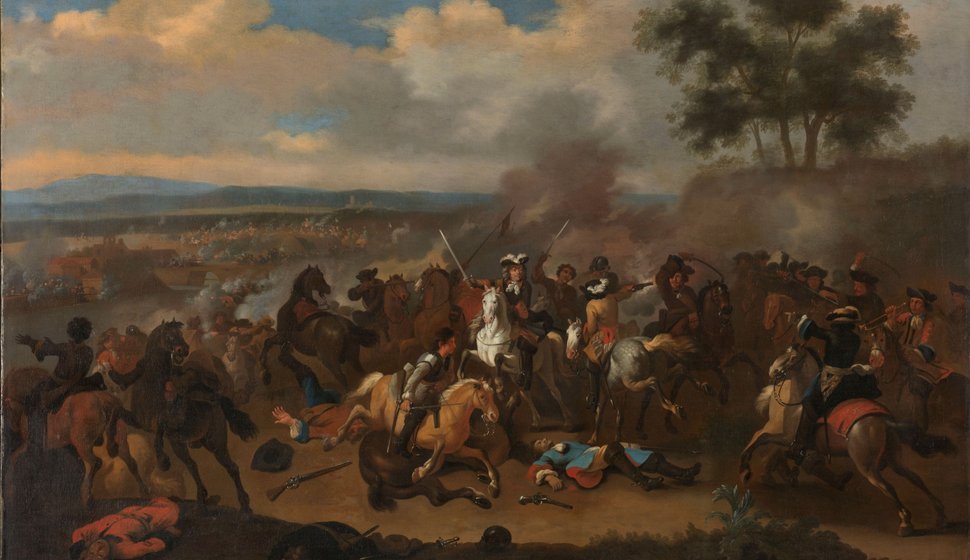
Battle of the Boyne date
The Battle of the Boyne, a pivotal clash in the Williamite War in Ireland, is scheduled with the following date:
- Sunday, 12th July 2026
- Monday, 12th July 2027
- Wednesday, 12th July 2028
The battle was fought on 1 July 1690 in the old Julian calendar, near Drogheda on the River Boyne. Today it’s most commemorated on 12 July, often called ‘The Twelfth’ or ‘Orangemen’s Day’.
Origins
The Battle of the Boyne was fought on 1st July 1690 (11th July according to the modern Gregorian calendar1) near the River Boyne in eastern Ireland, close to Drogheda, an urban district and seaport on the southern border of County Louth, Ireland.
It was a pivotal event in Irish and British history and was the largest event ever to take place on Irish soil. It formed part of a much wider European struggle for power and although the battle itself was relatively short, and not especially bloody, its political, religious, and cultural consequences were profound and long-lasting.
How the Battle of the Boyne began
The conflict arose from the Glorious Revolution of 16882, when James II3, the Catholic king of England, Scotland, and Ireland, lost the throne due to his unpopular pro-Catholic policies. He was a figure of suspicion to many Protestants, who held a deep-seated fear of Catholicism (‘popery’) and were worried that he might increase the power and influence of fellow Catholics and even allow a Catholic takeover of the government of Ireland.
Following his deposition, he was succeeded by King William III, a Dutch prince, also known as Prince William of Orange4, who had married James’ protestant daughter, Mary II5. Subsequently, James fled to France, where he gained the support of Louis XIV who recognised him as the rightful heir to the British throne. He also retained significant backing in Ireland, particularly among the Catholic population and, as a result, Ireland became James’s main base from which he hoped to regain his crown.
The ensuing battle formed part of the Williamite War6 in Ireland (1689–1691), which was itself linked to the broader Nine Years’ War7 between France and a European coalition led by William.
Fighting along the River Boyne
William III landed in Ireland in June 1690 with an army of about 36,000 men. His forces were multinational, including English, Dutch, Danish, German, and French Huguenot (protestant) troops. James II commanded a smaller army of roughly 25,000 soldiers, mainly Irish Catholics, supported by a contingent of French troops. While the Jacobite army was less well-equipped and trained, it had the advantage of fighting on familiar ground.
The opposing forces met along the River Boyne, which James used as a defensive line to block William’s advance on Dublin. On the morning of the battle, contrary to advice from some of his commanders, William employed a cautious strategy. He sent part of his army upstream to capture the crossings at Slane and Rossnaree while the rest forced crossings between Oldbridge and Drogheda. This manoeuvre proved to be very productive, dividing James’s forces and reducing their ability to respond effectively. Fighting at the river crossings was intense, but the Williamite troops eventually gained the upper hand.
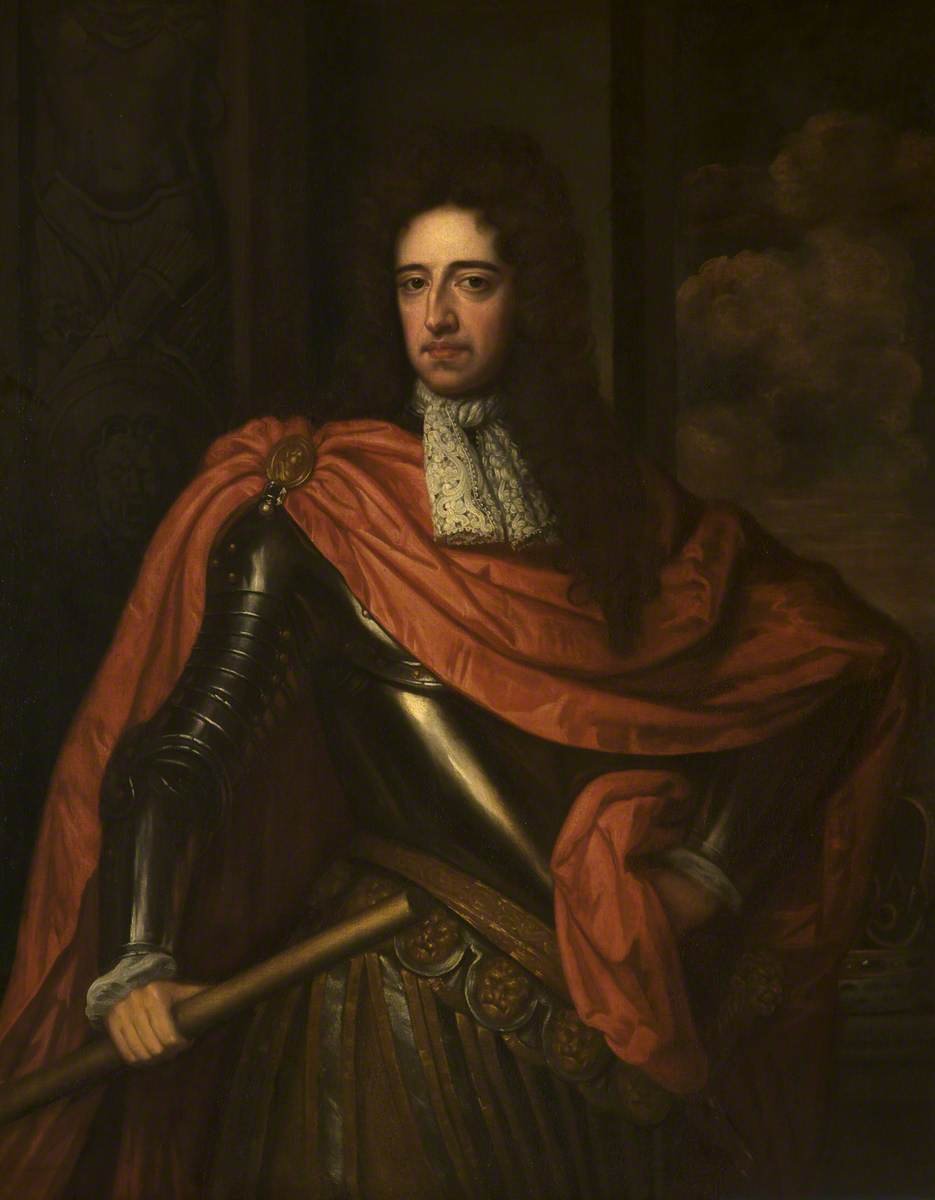
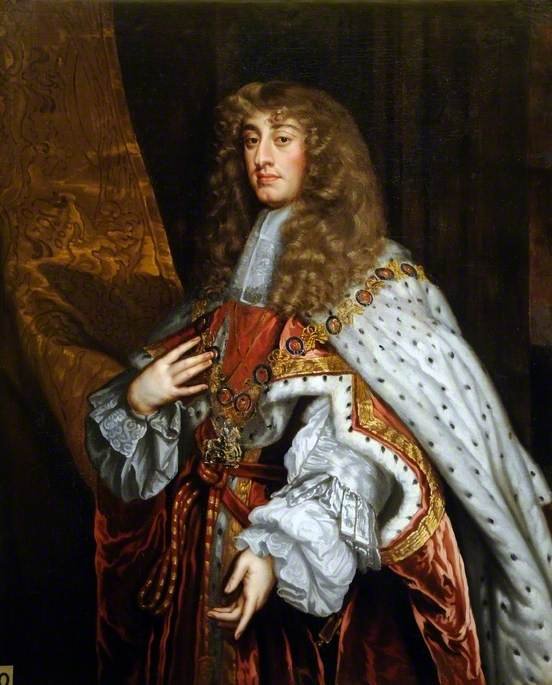
Although casualties were relatively light by the standards of seventeenth-century warfare, with around 1,500 to 2,000 killed on both sides, the battle had an enormous psychological impact. Crucially, James II fled the battlefield early, retreating to Dublin and then to France. His departure shattered Jacobite morale and earned him a reputation among his supporters as a coward. His disappointed Irish supporters even gave him the nickname ‘Séamus an Chaca’8 or ‘James the Shit.’
The battle’s impact on Ireland
Despite the victory allowing Williamite forces to enter Dublin shortly afterwards, the war in Ireland continued for another year. The conflict finally ended with the Treaty of Limerick9 in 1691, which confirmed William’s rule. While the treaty initially promised relatively lenient terms for Catholics, many of these guarantees were later undermined.
The long-term consequences of the Battle of the Boyne were far-reaching. It confirmed Protestant political dominance in Ireland, leading to the establishment of the Protestant Ascendancy10 and the introduction of harsh Penal Laws that restricted the rights of Catholics for generations, particularly in terms of property ownership and power. The battle also became a powerful symbol, particularly for Protestants in Ulster, representing the defence of their political and religious position.
Modern-day observance
Today, the Battle of the Boyne remains a significant and sometimes controversial historical event and its memory continues to influence discussions of identity, history, and politics in Ireland and Northern Ireland.
It is celebrated annually on 12th July by the Orange Order11, a Protestant fraternal organisation founded in 1795 in County Armagh which is committed to the protection of the principles of the Protestant Reformation. The observance is also referred to as ‘the Twelfth’, ‘the Glorious Twelfth’ or ‘Orangemen’s Day’.
Commemorating Protestant King William of Orange’s victory over Catholic King James II, the day sees an array of traditional events and activities:
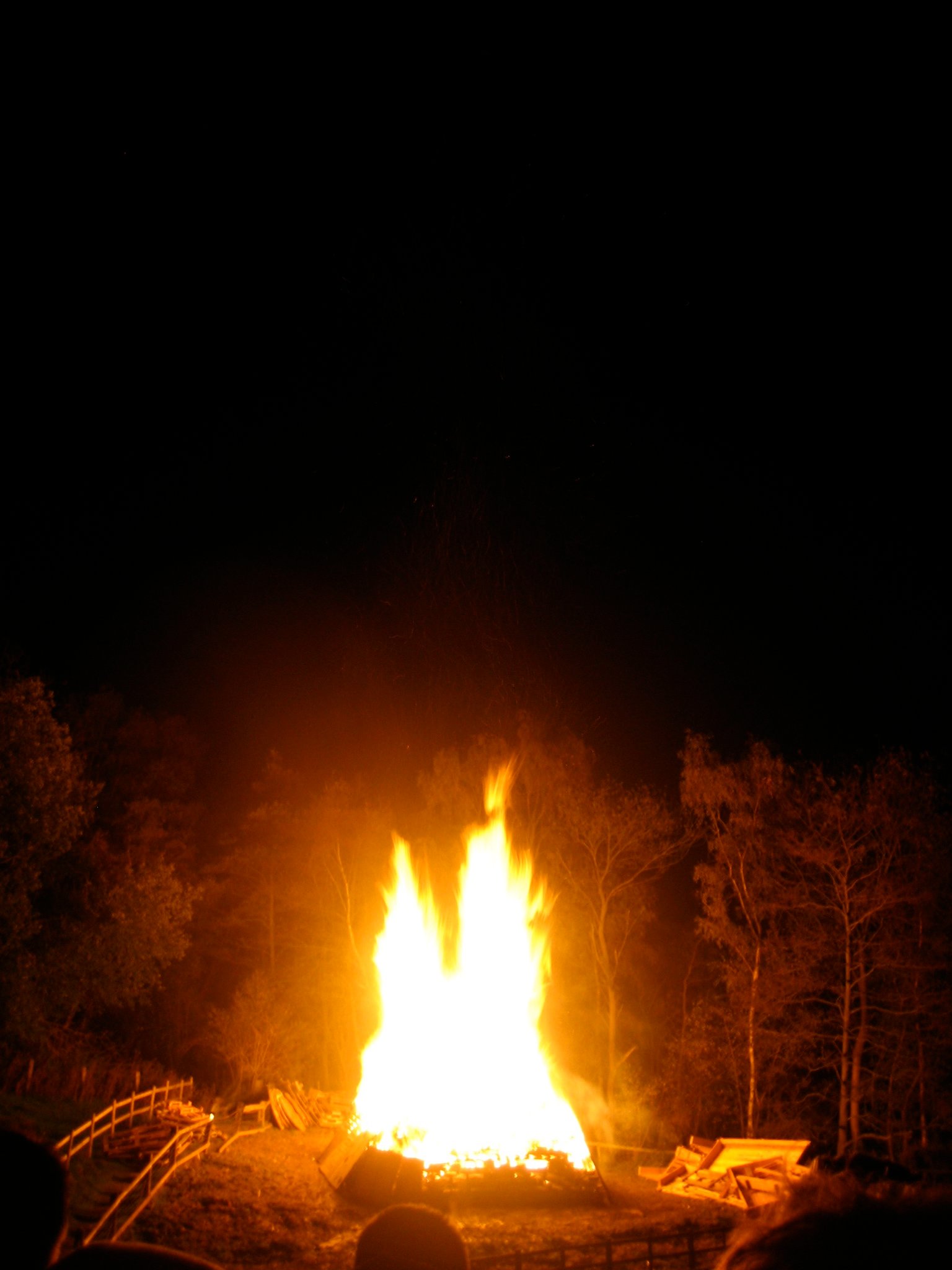
Eleventh Night bonfires12 - This tradition, which sees bonfires being lit in many loyalist areas across Northern Ireland, takes place on the eve of Orangeman’s Day. It is possible that their origins are rooted in the fact that fires were lit on the hills of Cos Antrim and Down during the Battle of the Boyne to help Williamite ships navigate through Belfast Lough at night.
Orange Order Parades – Street parades are the most well-known element of this historic day. Across Northern Ireland, members of the Orange Order march through towns and cities (often along historic or symbolic routes) in formal uniforms consisting of a dark suit, an Orange sash, white gloves, and a bowler hat. The Orangemen carry elaborate banners depicting Orange heroes, historical scenes, and political symbols and slogans13.
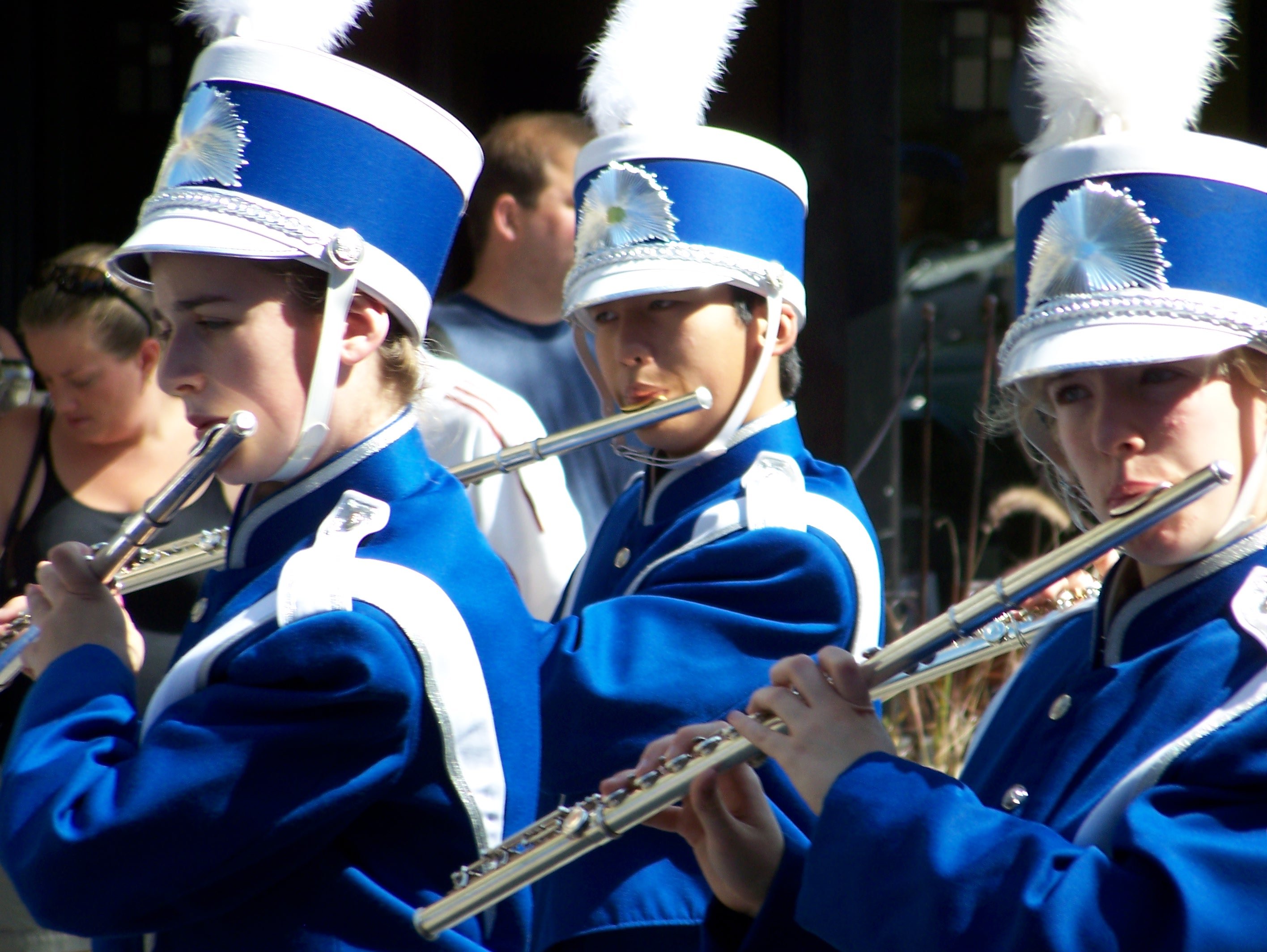
Marching bands – Marching bands showcasing protestant heritage accompany the Orange Order marchers. They have their own uniforms and colours and carry their own banners. They play marching tunes connected to the Orange Order and Protestant history, hymns, as well as loyalist songs. Religious hymns or patriotic songs may be included at certain points. Bands feature a variety of instruments which give the Twelfth its iconic, celebratory sound, Some of the most common instruments include:
- Drums - rhythmic drums keep the marching tempo and provide a deep underlying beat. They include snare, bass, tenor and side drums, as well as the famous Lambeg drum. This is a percussion instrument unique to Ulster14. It is made from stretched goatskin and hard wood timber and can reach sizes of 80 centimetres in diameter and over 60 centimetres in width. It’s no surprise that it is one of the largest and loudest percussion instruments in the world.
- Flute bands – Many different flute bands play during the street marches and provide the main melody for the traditional marches and hymns. Some of the most famous bands include the Pride of Ballinran Flute Band15 and the Churchill Flute Band16.
- Pipe bands – Providing a distinct part of the overall sound, pipe instruments include Great Highland pipes17, and Scottish smallpipes and borderpipes18.
Diamond Dan the Orangeman19 - In 2008, in an attempt to make the holiday more relevant to young people, the Orange Order created a cartoon super hero mascot to make the day more normal and iconic like other holidays. The name Diamond Dan dates back more than 200 years when the Orange Order institution was formed at the Diamond, Loughall, in 1795 with Dan Winter as one of the founding fathers of the Order. This cartoon character has attracted a lot of controversy due to its sectarian nature.
While the day has historically seen outbursts of sectarian violence, due to parade routes passing near or through nationalist/republican areas, today its reputation has improved immensely, with events over recent years being more peaceful due to the 1998 Good Friday Agreement20. However, the day is still a reminder of political and religious divides and is often seen as provocative by Northern Ireland’s Catholic community.
References
Gregorian calendar The solar calendar system introduced to reform the Julian calendar and correct seasonal drift.
UK Parliament Factsheet G4 Official House of Commons guide explaining how primary legislation is made in the UK Parliament.
Encyclopedia Britannica: James II James II, king of England, Scotland, and Ireland, the Glorious Revolution and his overthrow.
William of Orange Profile on the Dutch prince who became King William III of England.
Encyclopaedia Britannica: Mary II Biography of the joint monarch with William III.
The Jacobite-Williamite War – An overview The Irish Story article outlining the 1689–1691 conflict.
Nine Years War National Army Museum overview of the 1688–1697 European conflict involving William III’s England and allies against Louis XIV’s France.
Ten interesting facts about King James II Anglotopia blog post highlighting James II’s life and reign.
The Treaty of Limerick, 1691 University College Cork presenting the terms ending the 1689–1691 Jacobite–Williamite War in Ireland.
The Protestant Ascendancy The social‑political dominance of Protestants in 18th‑century Ireland.
Orange Order: Twelfth of July The annual Orange Order ‘Twelfth’ celebrations with parades across Northern Ireland and Donegal.
Eleventh Night bonfires in Northern Ireland Overview of Northern Ireland’s loyalist bonfire tradition.
What is Orangemen’s Day? The origins and meaning of Orangemen’s Day in Ulster culture.
Lambeg drum. Discover Ulster‑Scots page on the large percussion instrument associated with Ulster celebrations.
Pride of Ballinran GeoCities page on the Pride of Ballinran flute band and its community role.
Churchill Flute Band – Ireland’s oldest marching flute band Northern Ireland World feature on the historic parade band and its heritage.
Guide to Great Highland Bagpipe The Great Highland Bagpipe’s history, design and playing tradition.
Smallpipes & Border Pipes Guide to Scottish smallpipes and border pipes, covering history and characteristics.
Orange Irish seek hero to rebrand identity IrishCentral opinion piece on evolving Protestant/Orange community identity.
About the Good Friday Agreement Official website of the Government of Ireland: About the 1998 peace agreement’s background and provisions.
Read Also
-
The Battle of the Boyne: When, What Happened, and Why It Matters Overview of the 1690 battle and its significance in Irish history.
-
Battle of the Boyne – National Army Museum Key events and participants of the historic battle.
-
Orangemen’s Day – National Today Annual celebration and its cultural importance.
-
Battle of the Boyne / Orangemen’s Day – Umbrella HR Calendar entry and historical background of the commemoration.
-
Parading and the Battle of the Boyne – CAIN Ulster Analysis of parades and historical perspectives linked to the event.